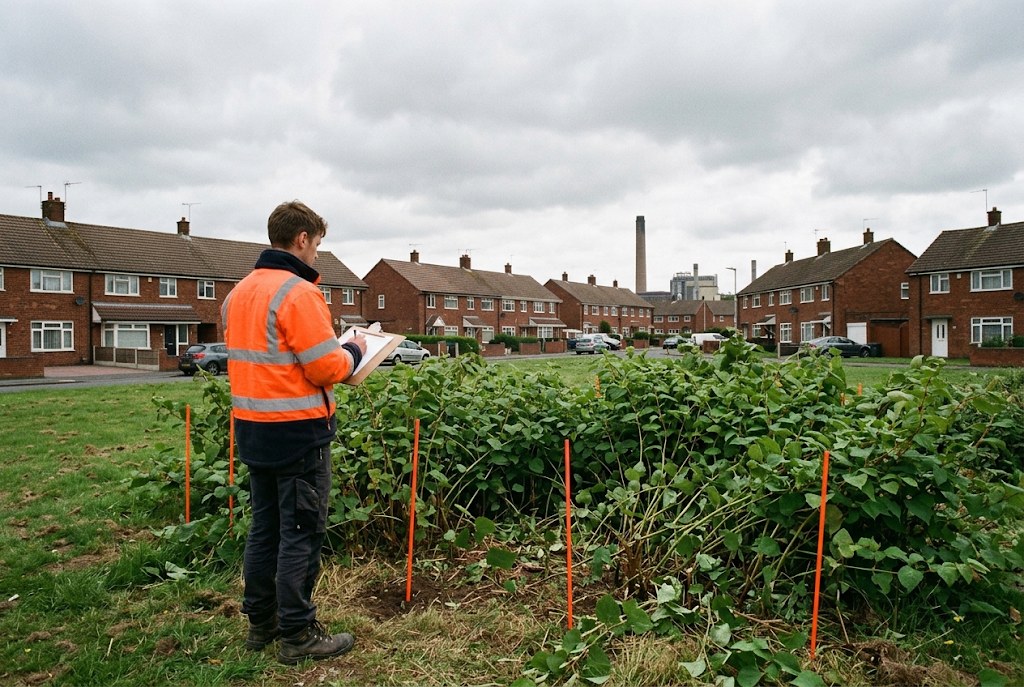
Checking a photo costs nothing. When it does turn out to be knotweed, we survey it, deal with it by spraying or digging, and put the plan on paper for your lender or solicitor. Surveys priced from £275.
A good share of the plants people send us are nothing to worry about.
Photograph a single leaf and a length of stem, then send them over. You get an answer with no charge attached. We only suggest a visit when the plant really is knotweed, and you see the price in writing before you agree to anything.
Come November the canes go brown and it looks as though the problem has gone. It has not. The rhizome carries on underground and the patch is wider the following summer.
Included in the survey:
Things you are not charged for:
Reports are written with RICS guidance on knotweed and residential property in mind. Take it to any contractor you like.
Former works land, cleared plots and older rented terraces are where a stand starts costing real money. We survey the site, write the method statement and carry out the spraying or excavation.
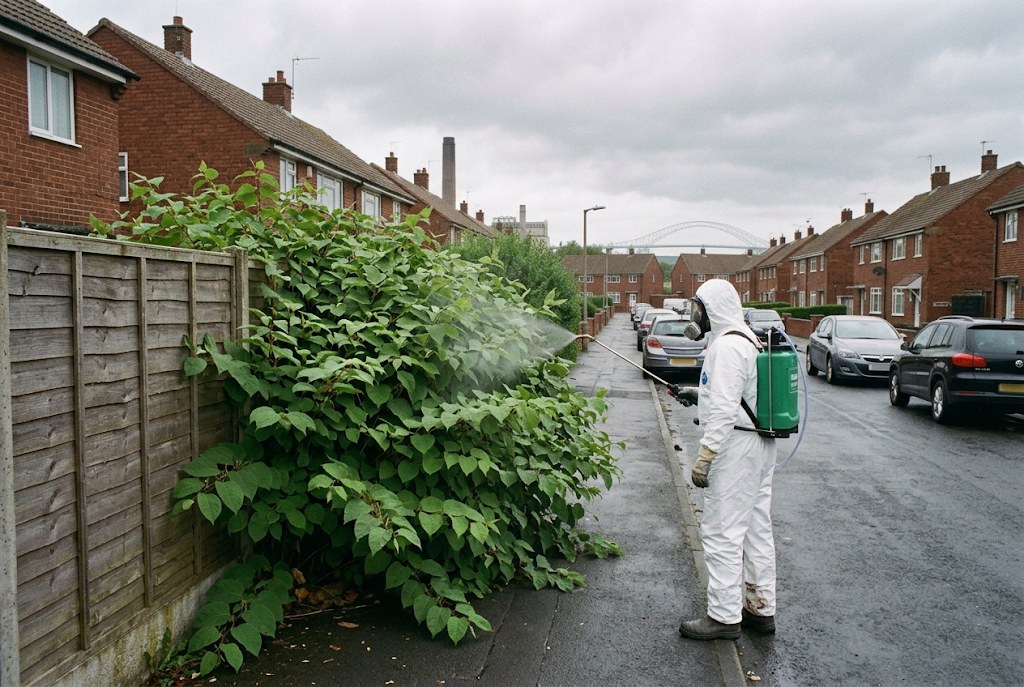
Spraying over a few seasons where there is time, excavation where there is not, and a membrane barrier when the stand is on the wrong side of a boundary. Waste is taken away with proper paperwork.
Most Widnes enquiries start with one of these.
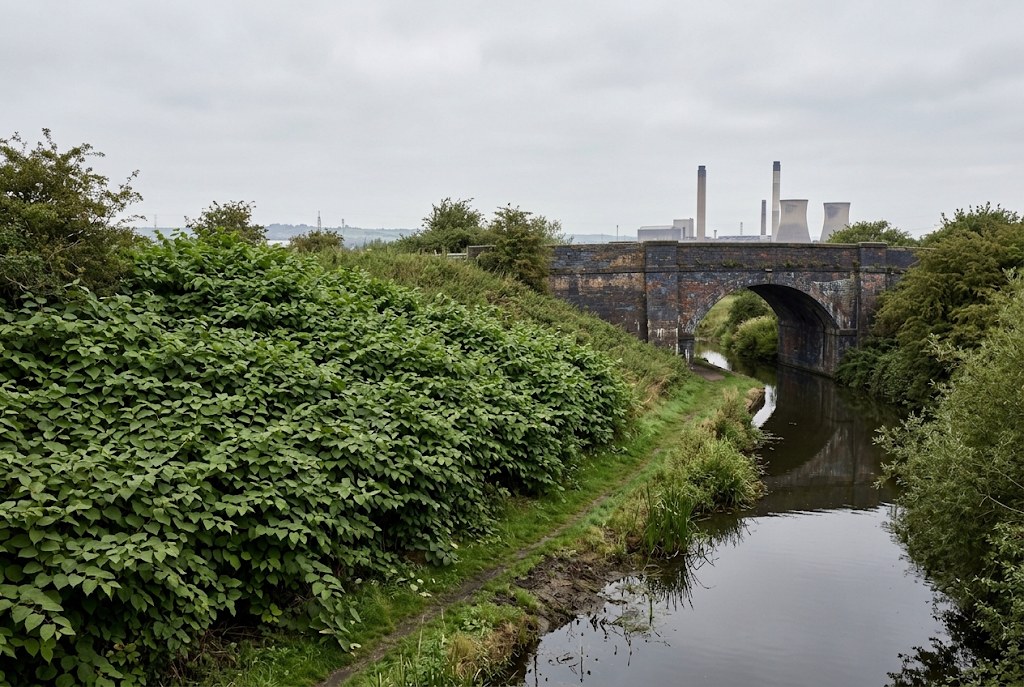
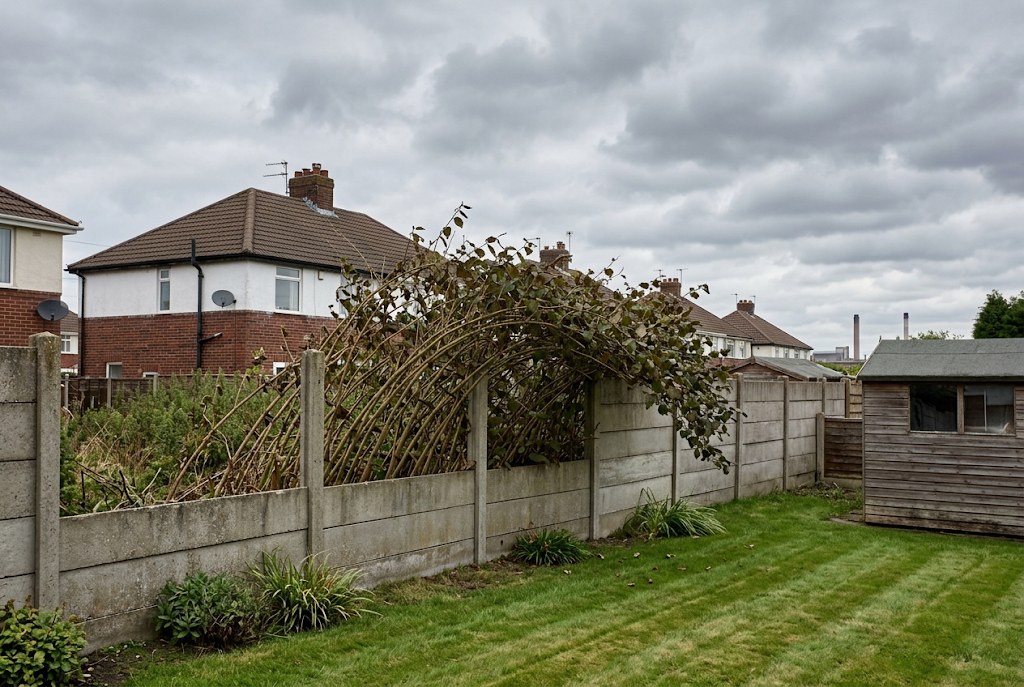
Gardens that run up to a rail embankment, a canal wall or a strip of waste ground see the most trouble. A survey shows how far it has reached across the boundary.
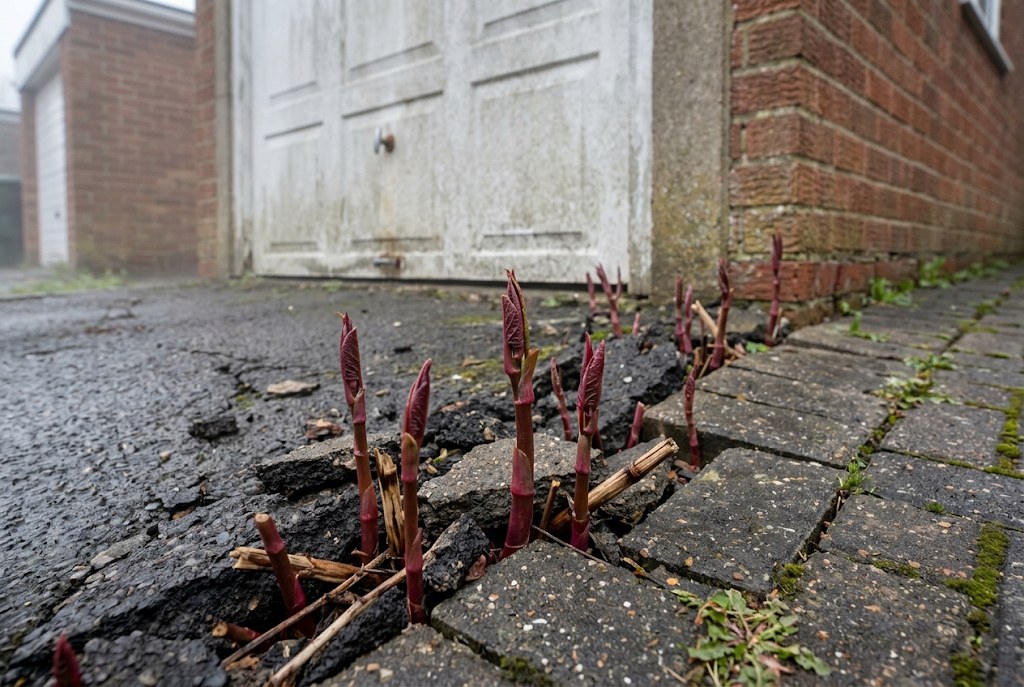
Red-purple tips pushing up beside a garage, a fence post or through the edge of the drive from April are the classic early sign.
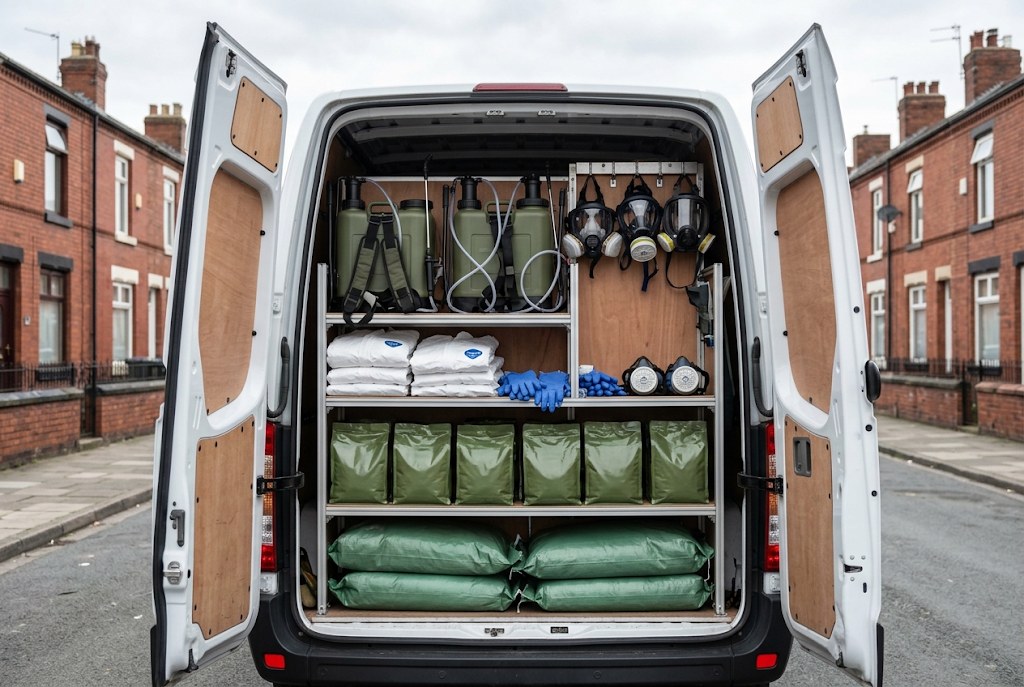
The TA6 asks about knotweed outright. Having a plan ready is easier than scrambling once the buyer's surveyor has flagged it.
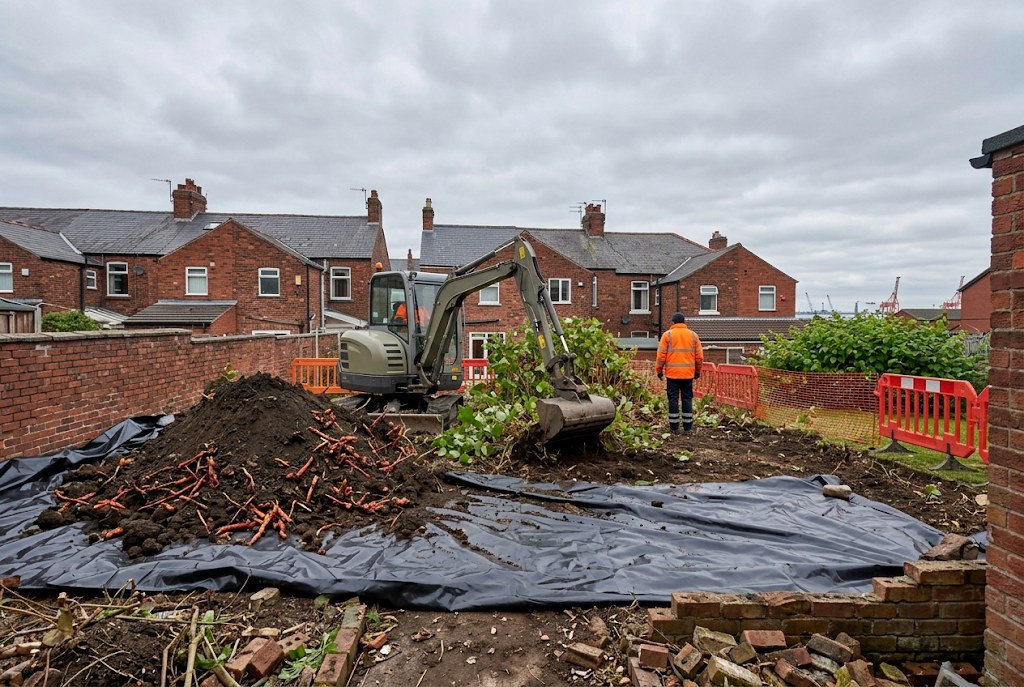
Footings dug through a stand can drag rhizome across the plot. Sort the knotweed out before the groundworkers turn up.
Often from a void house, a rental, or an empty plot. What you need is a dated record showing where it is and when you reported it.

Shoots forcing through tarmac or block paving point to rhizome underneath. Get it plotted before anything is laid again.
Widnes grew up around the chemical works on the north bank of the Mersey, and the ground still shows it. Victorian terraces sit near the town centre, council-built estates from the 1930s to the 1960s fill much of the rest, and railway lines, canal banks and big cleared plots cut through between them. Land that was filled, levelled or left empty after the works closed is the sort of ground knotweed colonises, and from there it creeps into gardens.
A survey establishes whether the stand started on your land or came over from elsewhere.
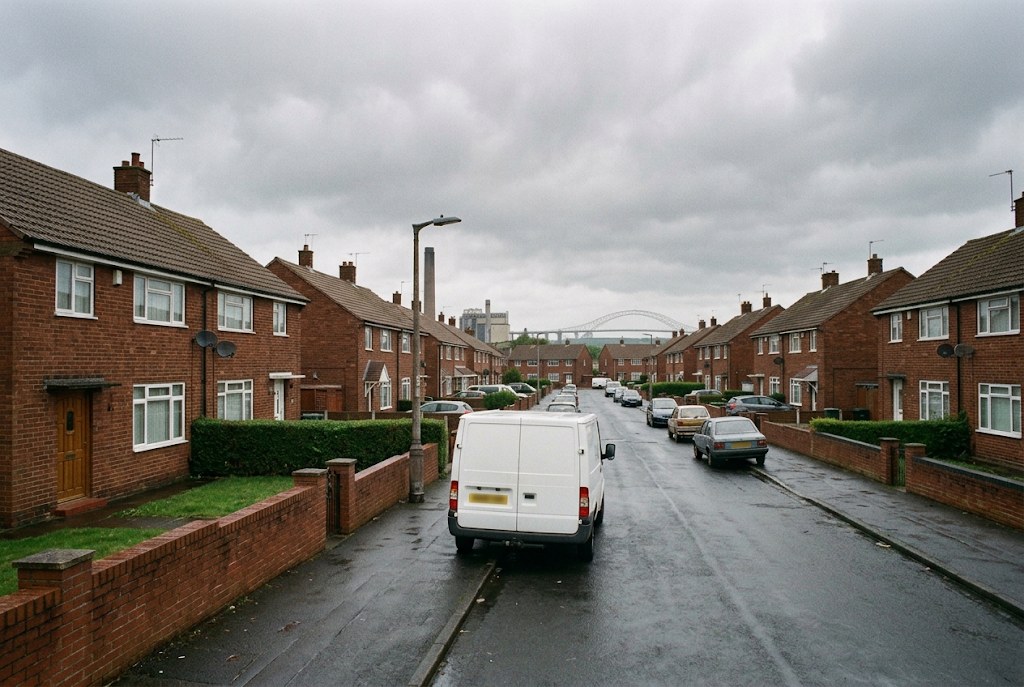
A leaf and a stem will do, via the contact form or message. Free of charge.
For a confirmed stand we visit, measure it and record what lies near it.
Seasonal spraying over several years, or digging out where the timetable demands it.
A written plan for you and your lender, and revisits until the stand stops regrowing.
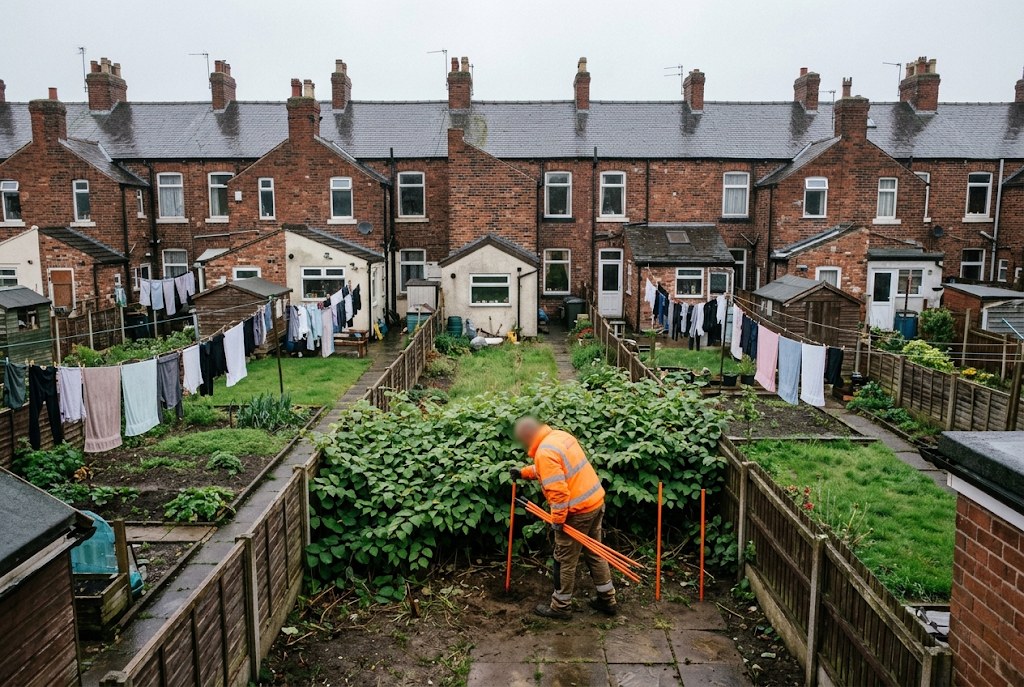
Send a picture through the contact page, or call. Whether it is knotweed or not, you hear from us at no cost.
Every WA8 address in Widnes, from the riverside at West Bank to the northern edge at Cronton. Based on the Widnes side of the Mersey, so most visits can be fitted in within a few days.
Photo check is free. You keep the report. We agree the price before any work begins.

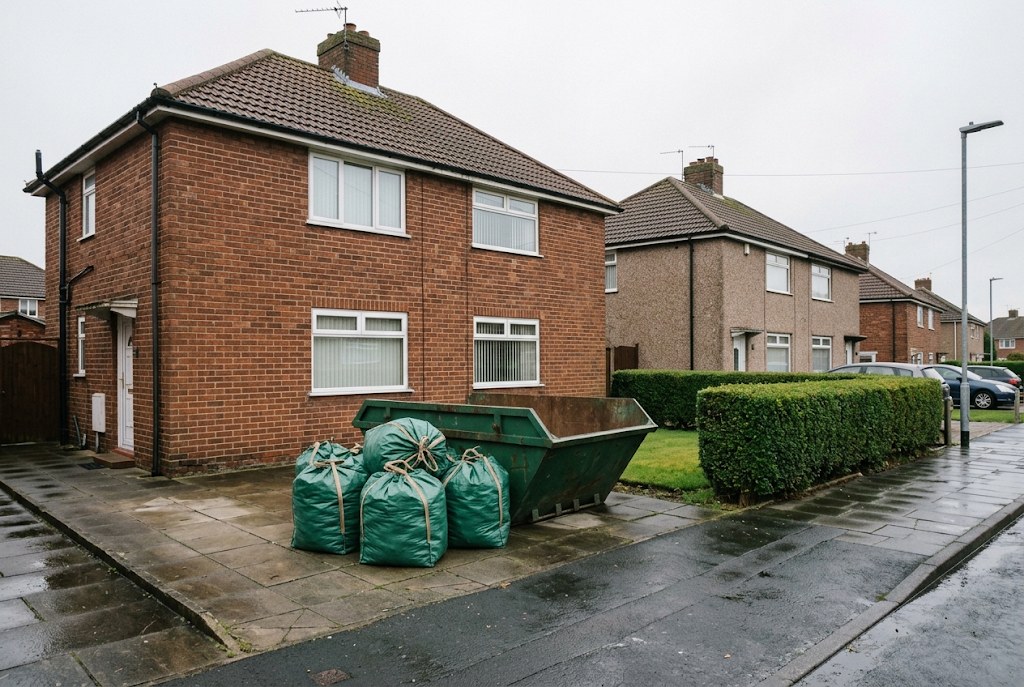 Knotweed on building plots