Free photo check · Mon–Fri 8am–6pm, Sat mornings · All WA8 addresses in Widnes
[phone] Free photo ID check
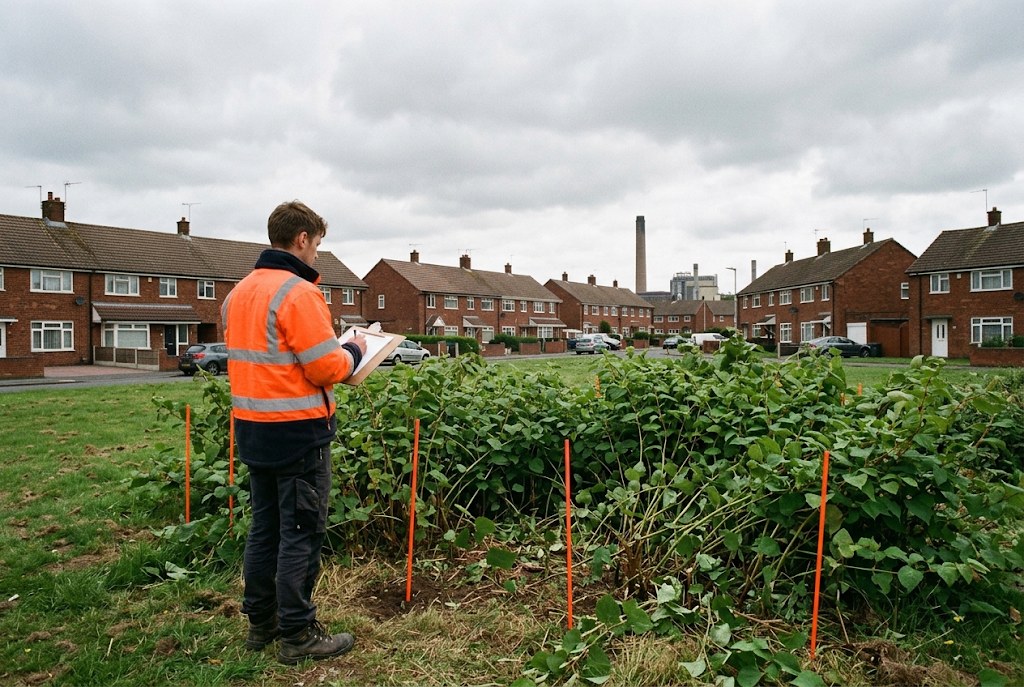
Surveyor at the edge of a Widnes estate checking rough ground for knotweed
Japanese Knotweed Removal · Appleton (WA8)

Is that plant in your Widnes garden knotweed? Message us a picture and we will tell you, free.

Checking a photo costs nothing. When it does turn out to be knotweed, we survey it, deal with it by spraying or digging, and put the plan on paper for your lender or solicitor. Surveys priced from £275.
Free photo ID check Survey from £275 Plans accepted by mortgage lenders
Stands dealt with
Stands dealt withCleared ahead of extensions, house sales and groundworks.
First signs
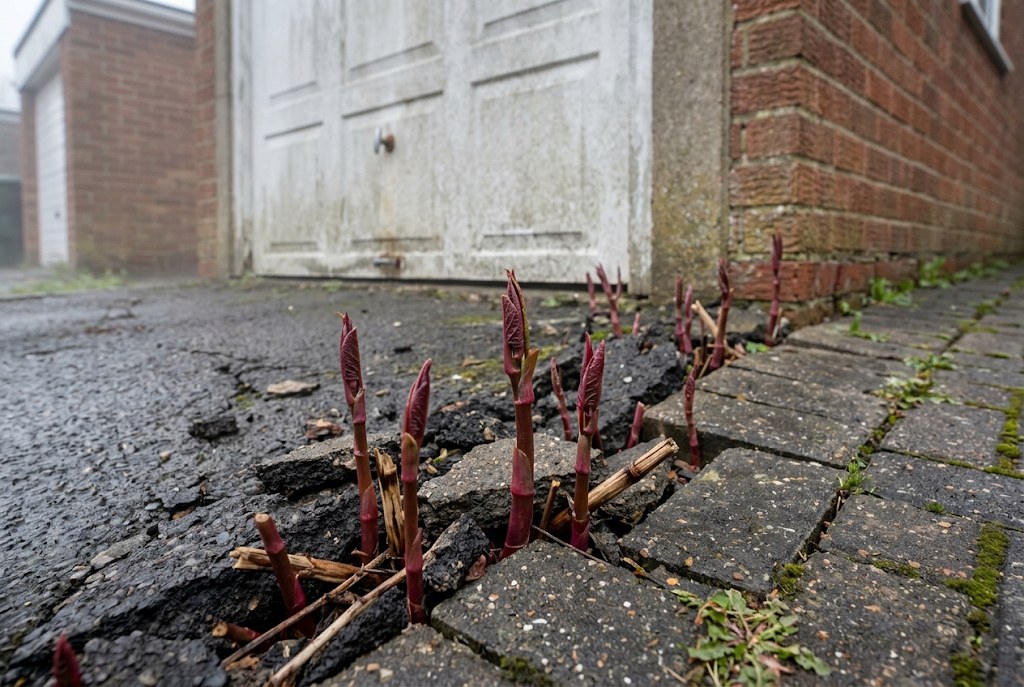
First signsPurple-red tips by a garage, a drive or a fence post are the early warning.
All of Widnes
All of WidnesWest Bank and Ditton through to Appleton, Cronton and Upton Rocks.
Check first, spend later

A good share of the plants people send us are nothing to worry about.

Photograph a single leaf and a length of stem, then send them over. You get an answer with no charge attached. We only suggest a visit when the plant really is knotweed, and you see the price in writing before you agree to anything.

The case for acting early

Left alone, knotweed just keeps growing

Come November the canes go brown and it looks as though the problem has gone. It has not. The rhizome carries on underground and the patch is wider the following summer.

Deal with it nowA young, small stand is cheaper to treat.
£275
Ignore itIt heads for the lawn, the drive and the neighbour's fence.
Bigger job
A buyer's surveyor spots itA lender may hold the sale until a plan exists.
Weeks lost
Hacking it backA scrap of root left behind is enough to regrow.
£££££
The survey price is the one shown here. Treatment is quoted in writing once we have seen the stand. No prices are given at the door.
£275 · One visit, one price Written quote before any work

✓ What that buys

Included in the survey:

  • On-site confirmation that the plant is knotweed
  • The stand measured, plotted and photographed
  • How close it sits to the house, drains, walls and boundary
  • A written report your lender or solicitor can use
  • Costed options for spraying or digging out

— What you never get

Things you are not charged for:

  • Checking a photo, even if it is a harmless plant
  • Getting to you anywhere in Widnes
  • Add-ons after the price is agreed
  • Excavation where spraying would work
  • Your own copy of the report

Reports are written with RICS guidance on knotweed and residential property in mind. Take it to any contractor you like.
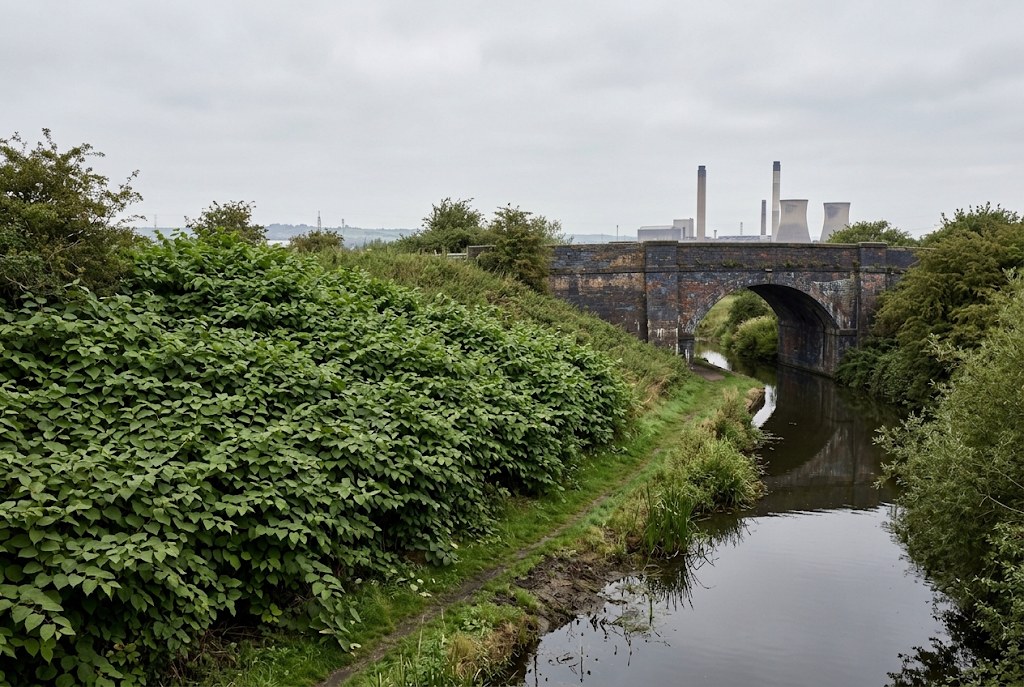
Japanese knotweed on an embankment in Appleton
Knotweed in Appleton

Filled ground, railway banks and cleared plots.

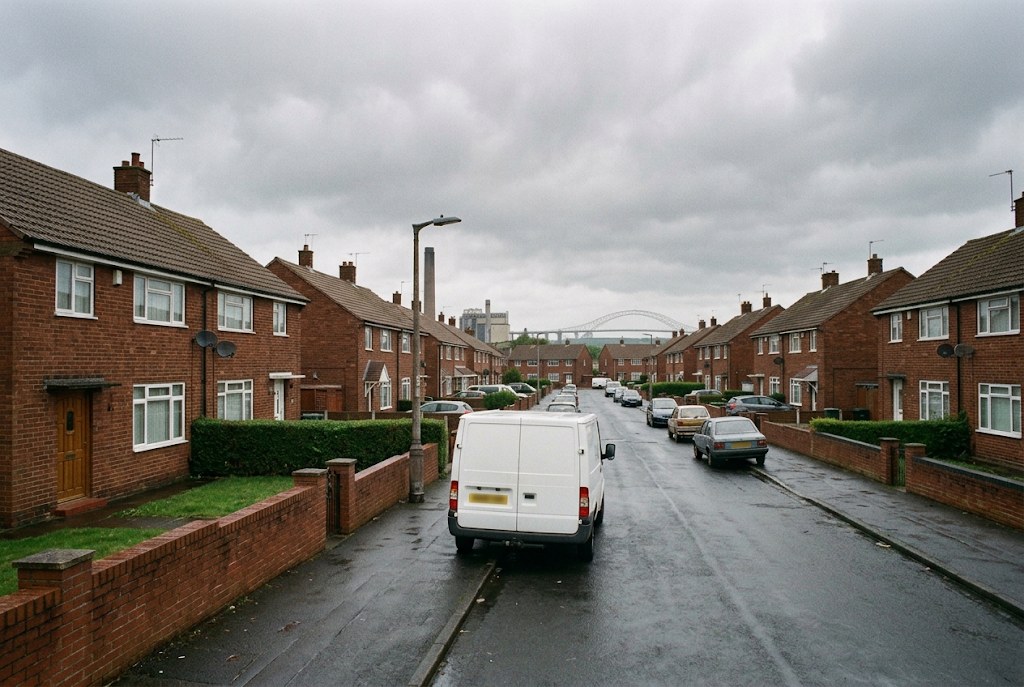
Appleton is largely interwar and postwar housing, with semis, short terraces and plenty of grass verges. Spare plots and green strips between the streets are the places a stand is usually first noticed.

A survey establishes whether the stand started on your land or came over from elsewhere.

Also covering the rest of Widnes — same price, same service.
Know the signs

What knotweed can look like around Widnes

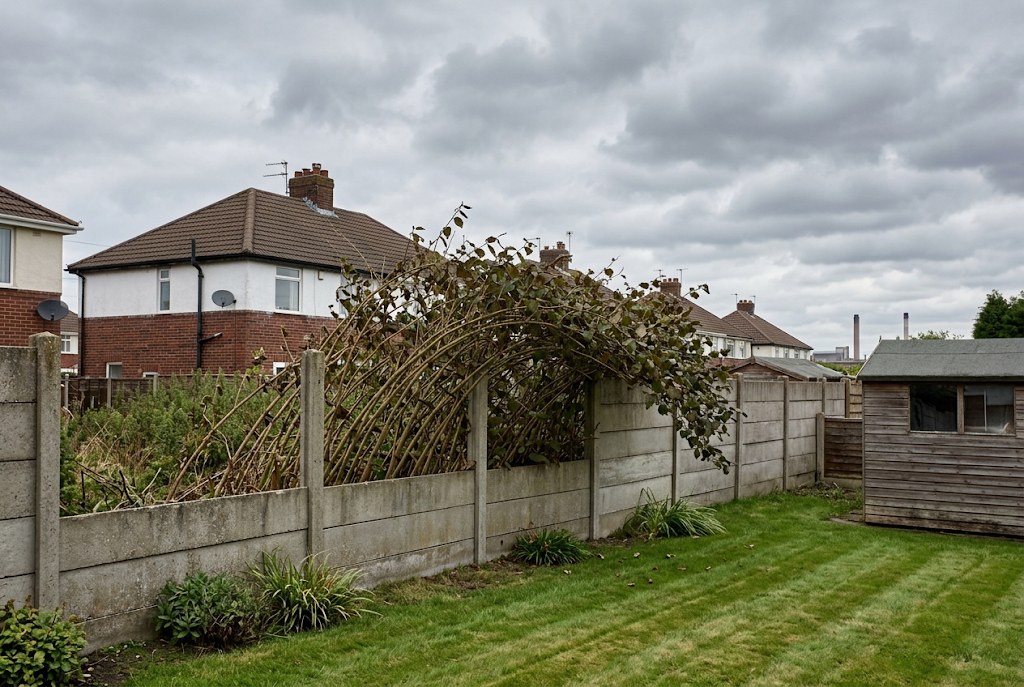
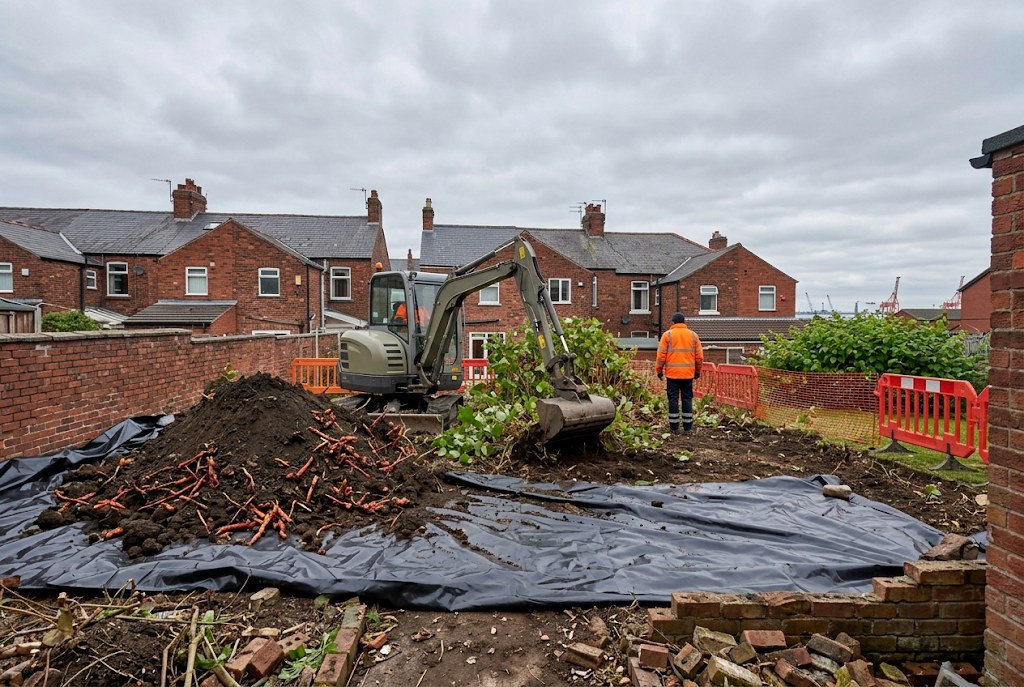
Canes on an unused plot beside an Appleton semi.
Spring shoots breaking through tarmac at the edge of a garage drive.
Knotweed growing on a canal or railway embankment beside a brick bridge.

Not sure it is knotweed?

Send a picture through the contact page, or call. Whether it is knotweed or not, you hear from us at no cost.

Send a photo
Widnes and the surrounding Halton district, from West Bank and Ditton out to Cronton and Upton Rocks

Widnes areas we cover

Every WA8 address in Widnes, from the riverside at West Bank to the northern edge at Cronton. Based on the Widnes side of the Mersey, so most visits can be fitted in within a few days.
Before you ring

Questions we get asked

There is a patch of waste ground next to our Appleton house. Does it matter?
It might. Unused plots seldom get inspected, so a stand can build up there and then reach neighbouring gardens. Photograph what you see and send it over.
How do I know if it is Japanese knotweed?
The stem is the giveaway. It is hollow, a bit like bamboo, flecked with purple, and it bends at every joint. Leaves are broad and shield-shaped with a straight base, and cream flower sprays show up late in summer. Brown canes stay standing over winter. Sending us a photo is quicker than comparing it with pictures online.
Is it illegal to have knotweed in my garden?
No, owning land with knotweed on it is not an offence. What you must not do is allow it to spread into the wild, and cut or dug material counts as controlled waste. If it moves onto a neighbour's land, they may be able to bring a claim.
Will knotweed stop me getting a mortgage?
Not automatically. A lot of lenders will go ahead when there is a professional survey, a treatment plan and an insurance-backed guarantee that can be passed to the buyer.
How long does treatment take?
Spraying generally runs for three to five growing seasons, then a monitoring period. Excavation is done in a few days, though it costs more.
Can I just dig it out myself?
We would not. Small bits of rhizome grow back, and the soil cannot just be bagged and put out with household waste or taken to the tip.
Does knotweed damage houses?
It exploits weaknesses such as cracks, drains, old paving and flimsy outbuildings. Sound foundations are rarely threatened, yet a stand close to the house can still hurt a valuation or hold up a sale.
What if it is coming from my neighbour?
Commission a survey so the location and the direction of spread are recorded. That document is what you then show the neighbour, or the landlord or owner of the plot next door.

Leave the strimmer where it is.

Photo check is free. You keep the report. We agree the price before any work begins.

Local notes

Interwar and postwar streets with long gardens

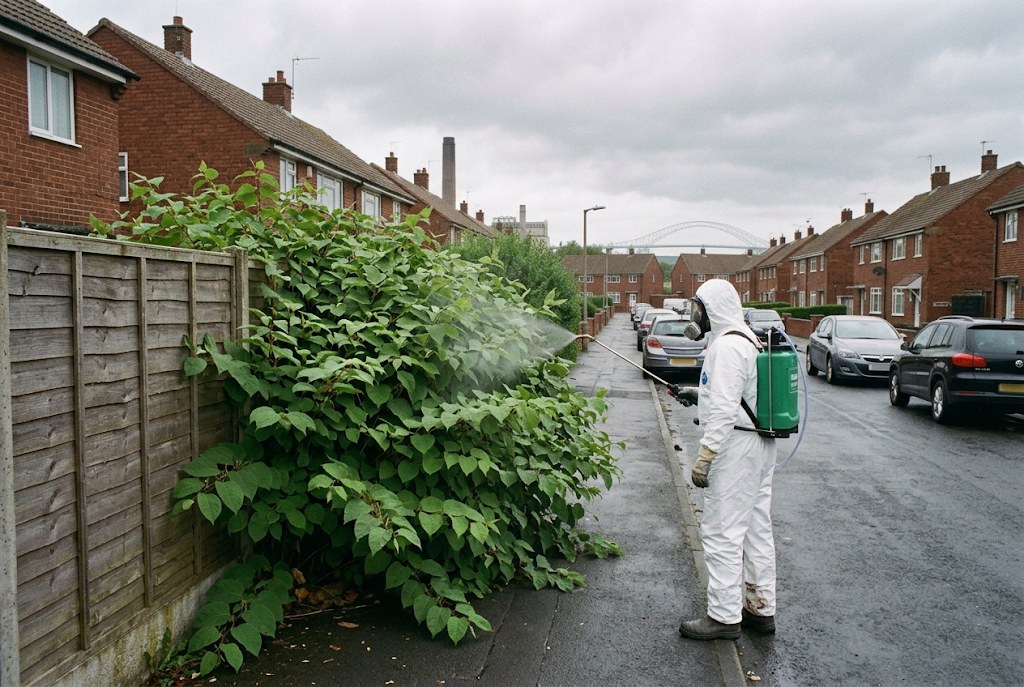
A stand in full summer leaf being sprayed by a trained operative.

Appleton is mostly interwar and postwar housing, with semis, short terraces and gardens big enough to include sheds, garages and a compost corner. Knotweed tends to turn up at the back of these plots, behind outbuildings, or on small pieces of unused land between streets. Garden waste tipped at the end of a plot and soil moved during landscaping are both ways the plant can arrive without anyone intending it.

Because the housing is established and sales are frequent, the property information form is where knotweed often comes up. A buyer's surveyor who spots it can delay a mortgage offer. If you plan to extend, build a garage or lay a patio, a survey beforehand is sensible, since digging into a stand spreads it. Ask neighbours too, as a stand a few gardens along may reach you.

Call [phone]